April 6, 2026 · 15 min read
Choosing Material & FinishDurable Labels: The Materials That Actually Hold Up
Dans cet article
• The materials built to resist moisture, cold, and handling
• The special challenge of retort-sterilized jars and cans
• What to test before you commit to a full production run
What actually wears a label out
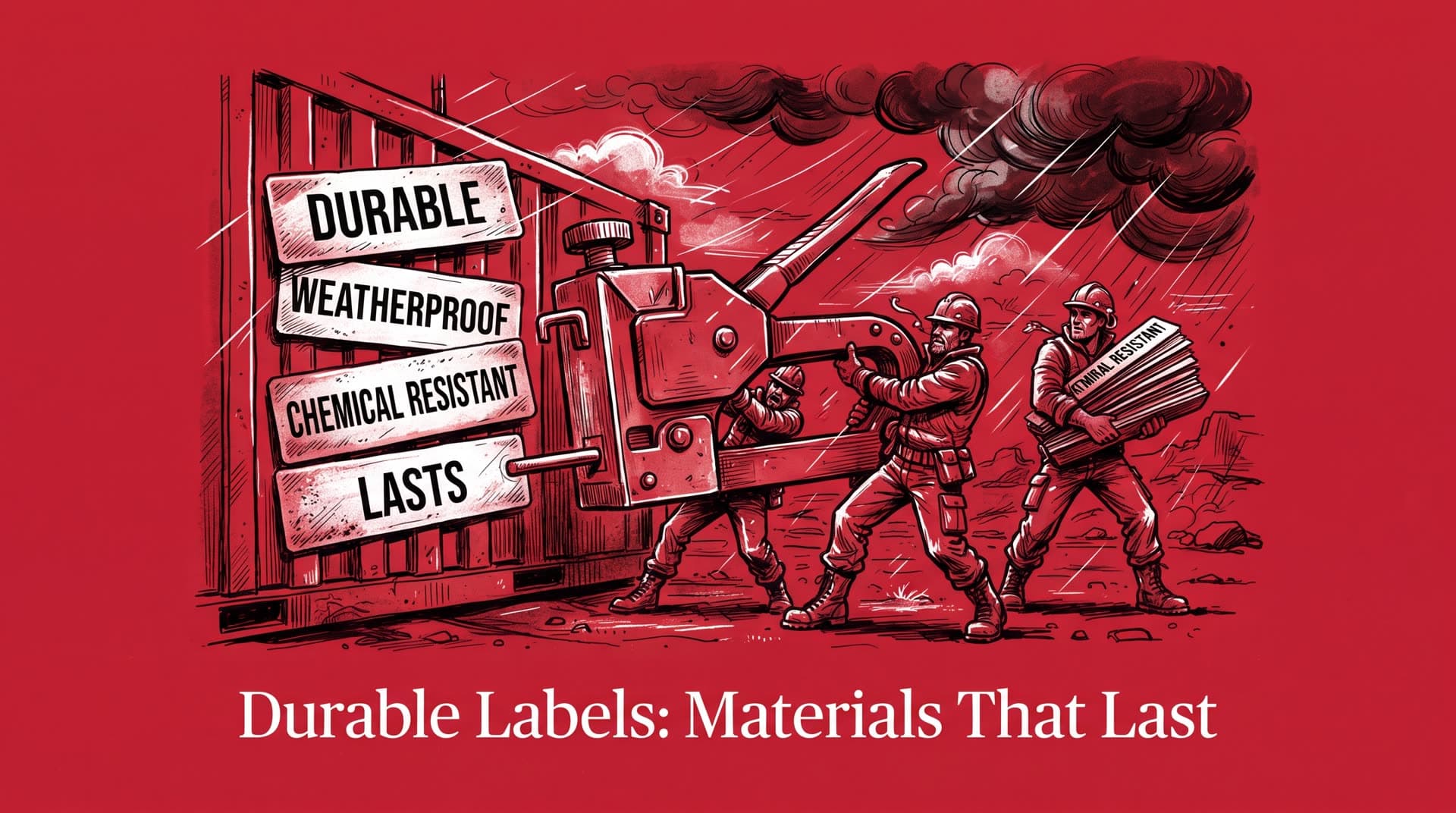
A canner runs a batch of soup through the retort sterilizer on a Thursday afternoon, exactly the way they always have. By Friday morning, a rack of cans near the back of the pallet has labels wrinkled and half-lifted at the seam, while the rest of the batch looks fine. Nothing about the recipe or the sterilizer changed. What changed was a new roll of labels from a different supplier, printed on stock that was never rated for heat and pressure at the same time, and nobody caught it until the cans were already cooling on the rack.
A label doesn't just get tested on the shelf. It goes through the production line, the cold room, transport, handling at the grocery store, and sometimes retort sterilization for canned goods. Every stage is a chance to lose adhesion or legibility.
The three most common culprits are moisture, extreme cold, and repeated friction. A material or adhesive mismatched to even one of these is enough for a label to peel, curl, or become unreadable before the product ever sells. In our experience, it's rarely one catastrophic failure, it's a slow accumulation of small stresses, a cold cycle here, a rough handling pass there, that eventually tips a marginal label over the edge.
It's rarely one catastrophic failure. It's a slow accumulation of small stresses that eventually tips a marginal label over the edge.
Polypropylene (BOPP): the standard for cold and moisture
Biaxially oriented polypropylene film, BOPP in industry shorthand, resists water, oils, and mild chemicals. It's the reference material for anything living in a fridge, a freezer, or a humid environment: deli meats, dairy, sauces, smoked fish.
For frozen products, the adhesive matters as much as the film itself. A freezer-grade adhesive stays bonded even as the container sweats coming out of the freezer, and that's usually the exact moment a poorly chosen label peels off.
BOPP itself typically comes in a few finishes, clear, white, or silver-metalized, and the choice affects more than looks. A white BOPP gives ink a cleaner, more opaque background on a clear container, while silver BOPP is often used to simulate a foil look at a lower cost, though it changes how colors print and usually needs an adjusted color profile from your printer to avoid a dull, washed-out result.
Freezer-grade adhesives are generally built on a modified acrylic base rather than a rubber-based one, specifically formulated to stay tacky at low temperatures instead of stiffening up and losing grip the way a standard adhesive does once it drops below a certain threshold.
Jars and canned goods: a different challenge
Retort-sterilized products face heat, moisture, and pressure at the same time, on top of repeated handling at the store. A standard paper stock doesn't survive that process; it needs a material and adhesive specifically tested for sterilization.
For jars stored dry without heavy sterilization, like jams, terrines, or farm products, a quality paper stock with a kraft finish can work well and gives the artisanal look a lot of small producers are actually going for.
Retort-rated labels are usually built with a specialized film and a high-temperature adhesive designed to survive being submerged in near-boiling water or steam under pressure for an extended cycle, sometimes upward of an hour depending on the product. Standard adhesives soften or fail entirely under that combination of heat and moisture, which is why a label that looks identical to a retort-rated one on the roll can behave completely differently once it goes through the sterilizer.
What to test before you commit to a full run
The only reliable way to know if a label will hold is to apply it to the actual container, under actual conditions of temperature, humidity, and handling, and let it live through the product's full cycle, from filling to the customer's fridge. A desk test under dry lighting tells you nothing.
Pay close attention to corners and edges. That's almost always where peeling starts, especially on containers with curves or textured surfaces like frosted glass or embossed plastic.
It also helps to test more than one unit and more than one cycle. A single sample surviving one trip through the retort or the freezer doesn't prove much; run three to five samples through two or three full cycles, and check them again after they've sat at room temperature for a day, since some adhesive failures only show up after the material has fully relaxed back to ambient conditions.
KEY TAKEAWAYS
Moisture, extreme cold, and repeated friction are the three most common causes of label failure, a mismatch on any one is enough.
BOPP is the standard for fridge, freezer, and humid environments, but the adhesive underneath matters as much as the film itself.
Retort-sterilized jars and cans need a specialized film and high-temperature adhesive rated for heat and pressure together, not standard stock.
Test three to five samples through two or three full cycles, then re-check after a day at room temperature, not just right after the test.
Applying a label to a container that's still warm or damp weakens the bond permanently, build a cool-down step into your line.
FREE GIFT
Download our materials and finishes guide
Compare paper, vinyl, and finishes to make the right choice.
DownloadAvoiding premature peeling
A mismatch between the adhesive and the container surface is the most common cause of peeling, not the label stock itself. An adhesive built for cardboard doesn't grip the same way on wet glass or frosted plastic.
Before running a full order, always request a sample applied to your actual final container. That's a test that takes a week and saves you months of customer complaints or rush reprints.
Surface prep matters more than most producers expect. Applying a label to a container that's still slightly warm from sterilization, or damp from a rinse cycle, weakens the initial bond permanently, the adhesive never gets a proper first grip, even if the container looks dry a minute later. Building a short cool-down and dry-down step into your labeling line before the label goes on is one of the cheapest fixes for chronic peeling issues we see.